The main Program of
VANJ Conference 2026
will be in one day
2026/11/14 (Sat).
Registration (Friday, Nov. 13 ~ )
Laboratory Tour (Sunday, Nov. 15)
We will hold multiple Special Sessions (Onsite), General Oral sessions (Hybrid) and Poster sessions (Online and Onsite). Attendees will have chance to interact face-to-face onsite and through an online conference platform.
SPECIAL SESSIONS
Special Session – Advances in Semicondutor Materials, Devices and Applications
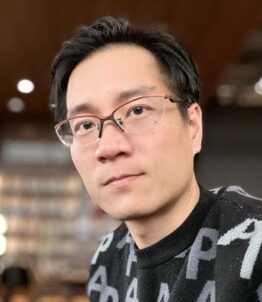
Chair: Dr. Phan Trong Tue
✧ Affiliation: Micron Memory Japan
✧ Email: ptuephys[at]gmail.com
This session will highlight recent advances and emerging trends in semiconductor materials, devices, and their applications, bringing together perspectives across materials science, device engineering, and applied technologies. The session will explore the development of novel semiconductor materials and material systems, including wide-bandgap, ultra wide-bandgap, two-dimensional, and emerging functional materials, as well as advances in material synthesis, processing, characterization, and integration. Particular attention will be given to the translation of material innovations into next-generation semiconductor devices, including transists, power devices, optoelectronic devices, sensors, and other emerging device architectures. Topics may include device design and fabrication, interface and contact engineering, reliability, performance enhancement, and integration with advanced semiconductor platforms.
Special Session – Semiconductor
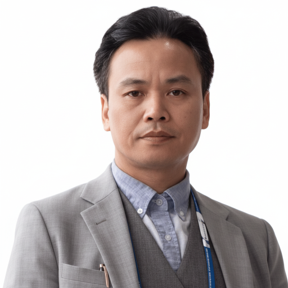
Chair: Prof. Ngo Van Nong
✧ Affiliation: Center for Low-temperature Plasma Science, Nagoya University
✧ Email: ngo.van.nong.d2[at]f.mail.nagoya-u.ac.jp
Special Session – AI, Data Science, and Digital Transformation

Chair: Asst. Prof. Pham Quang Trung
✧ Affiliation: Hiroshima University
✧ Email: trungpq[at]hiroshima-u.ac.jp
Special Session – Advanced Materials and Applications
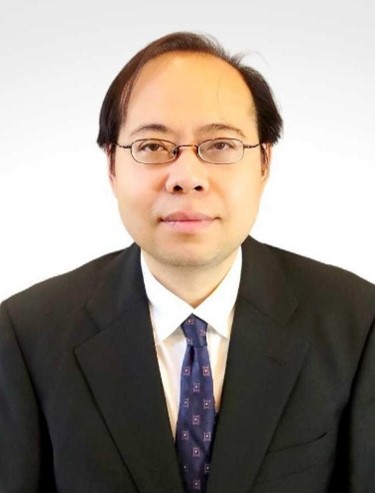
Chair: Prof. Pham Nam Hai
✧ Affiliation: Department of Electrical and Electronic Engineering, Institute of Science Tokyo
✧ Email: pham.n.ab[at]m.titech.ac.jp

Chair: Dr. DOAN Thi Kim Dung
✧ Affiliation: Innovation center of NanoMedicine
✧ Email: doan-d[at]kawasaki-net.ne.jp
Special Session – Smart and Resilient Infrastructure, Cities, and Transportation Systems
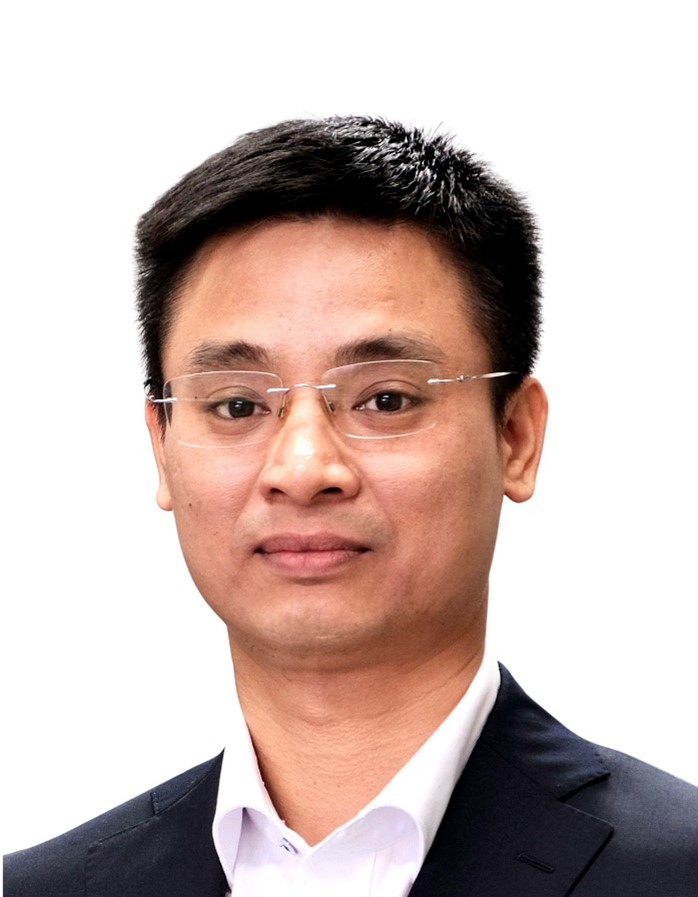
Chair: Asst. Prof. Nguyen Huu May
✧ Affiliation: Hiroshima University
✧ Email: nguyenhuumay[at]hiroshima-u.ac.jp

Chair: Dr. Bui Ngoc Kien
✧ Affiliation: Tokyo University
✧ Email:
The session focuses on emerging approaches for developing and managing smart, resilient, and sustainable infrastructure, urban systems, and transportation networks in response to growing societal and environmental issues. Presentations will cover advances in digital technologies, data-driven monitoring and asset management, predictive and computational modeling, innovative and sustainable materials, and integrated urban-transport planning. This session aims to bridge the interdisciplinary perspectives across infrastructure, materials, urban systems, and mobility to advance the understanding of system performance and resilience, enhance research translation to practice, and identify strategic pathways toward next-generation infrastructure, cities, and transportation systems.
Special Session – Innovations for Sustainable Environment, Agriculture, and Bio-Resource Utilization

Chair: Asst. Prof. Tran Duc Viet
✧ Affiliation: Hiroshima University
✧ Email: tranducviet[at]hiroshima-u.ac.jp

Co-chair: Dr. Pham Toan Thuc
✧ Affiliation: Jichi Medical University
✧ Email: phamtoan.thuc[at]jichi.ac.jp
This session explores innovative research and practical approaches that advance environmental sustainability, resilient agriculture, and the efficient utilization of biological and renewable resources. It provides an interdisciplinary platform for researchers, academics, and practitioners to exchange recent advances in technologies, methodologies, and applications addressing emerging environmental and resource-related challenges.
The session welcomes studies on sustainable environmental management, pollution prevention and remediation, wastewater and solid waste treatment, circular economy, resource recovery, and nature-based solutions. Particular attention is given to innovative approaches that transform agricultural residues, biomass, and other underutilized resources into valuable materials, products, or energy, thereby reducing waste and promoting resource efficiency.
Research related to sustainable agriculture is also encouraged, including soil and water management, biofertilizers, agricultural biotechnology, climate-resilient practices, and technologies that enhance agricultural productivity while minimizing environmental impacts. Studies on bio-resource utilization may cover biomass conversion, bio-based materials, biochar, microbial technologies, bioprocessing, and other strategies for converting renewable resources into value-added products.
By bringing together perspectives from environmental science, agriculture, biotechnology, engineering, and related disciplines, this session aims to highlight innovative solutions that bridge scientific research and real-world applications. We particularly encourage contributions that demonstrate practical applicability, interdisciplinary collaboration, circular resource use, and potential contributions to the Sustainable Development Goals.
Special Session – Policy, Economy, Education, and Innovation for Sustainable Development: Interdisciplinary Perspectives in a Globalized World

Chair: Dr. Phuong Tran
✧ Affiliation: Center for Foreign Language Education and Research (FLER), Rikkyo University
✧ Email: phuongtran[at]rikkyo.ac.jp

Co-Chair: Asst. Prof. Nguyen Anh Hao
✧ Affiliation: Waseda University
✧ Email: nguyenanhhao040294[at]gmail.com
Sustainable development is no longer the responsibility of any single discipline or sector. In an increasingly globalized and technology-driven world, achieving the Sustainable Development Goals requires coordinated efforts across policy, economy, education, technology, and society. This session brings together interdisciplinary perspectives to explore how these dimensions interact in shaping more equitable, inclusive, and sustainable development.
The session examines sustainability through three interconnected perspectives. The first focuses on equity, policy, and educational structures, exploring how context-responsive educational policies and curricula can address—or unintentionally reproduce—structural inequalities, particularly in marginalized and rural communities.
The second perspective addresses internationalization, partnerships, and the social role of universities. Presentations examine Japan–Vietnam student mobility, reciprocal international exchange, and university–community engagement across Asia-Pacific contexts. These studies highlight the importance of developing partnerships that are mutually beneficial, locally responsive, and sustainable over the long term.
The third perspective focuses on innovation, artificial intelligence, and entrepreneurship. Presentations explore AI competency, digital and virtual exchange, and the growing role of AI in education and entrepreneurial development. Particular attention is given to how educational innovation can support sustainable development while addressing emerging challenges such as inequality, digital dependency, and AI-related anxiety.
Through these diverse perspectives, the session invites researchers and practitioners to reflect on how policy, economy, education, and innovation can work together to advance sustainable development in a globalized world. The session concludes with an interactive discussion on building more inclusive educational systems, reciprocal partnerships, and responsible innovation that contributes meaningfully to sustainable development.
General Sessions
General Session 1

Chair: Dr. Hoang Kim Oanh
✧ Affiliation: Gaia Vision Inc.
✧ Email: oanh.hoang[at]gaia-vision.co.jp

Co-Chair: Asst. Prof. Nguyen Thi Thuong
✧ Affiliation: Ritsumeikan University
✧ Email: thuong[at]fc.ritsumei.ac.jp
General Session 2

Chair: Asst. Prof. Pham Tam Long
✧ Affiliation: College of International Management, Ritsumeikan Asia Pacific University
✧ Email: longpt[at]apu.ac.jp

Co-Chair: Asst. Prof. Nguyen Anh Hao
✧ Affiliation: Institute of Asia-Pacific Studies, Waseda University
✧ Email: anhhaonguyen[at]aoni.waseda.jp
General Session 3

Chair: Asst. Prof. Trinh Xuan Thi Nguyen
✧ Affiliation: School of Economics, Hiroshima University
✧ Email: nguyen93[at]hiroshima-u.ac.jp