The main Program of
VANJ Conference 2026
will be in one day
2026/11/14 (Sat).
Registration (Friday, Nov. 13 ~ )
Laboratory Tour (Sunday, Nov. 15)
We will hold multiple Special Sessions (Onsite), General Oral sessions (Hybrid) and Poster sessions (Online and Onsite). Attendees will have chance to interact face-to-face onsite and through an online conference platform.
SPECIAL SESSIONS
Special Session 1 – Smart and resilient infrastructure, cities, and transportation systems
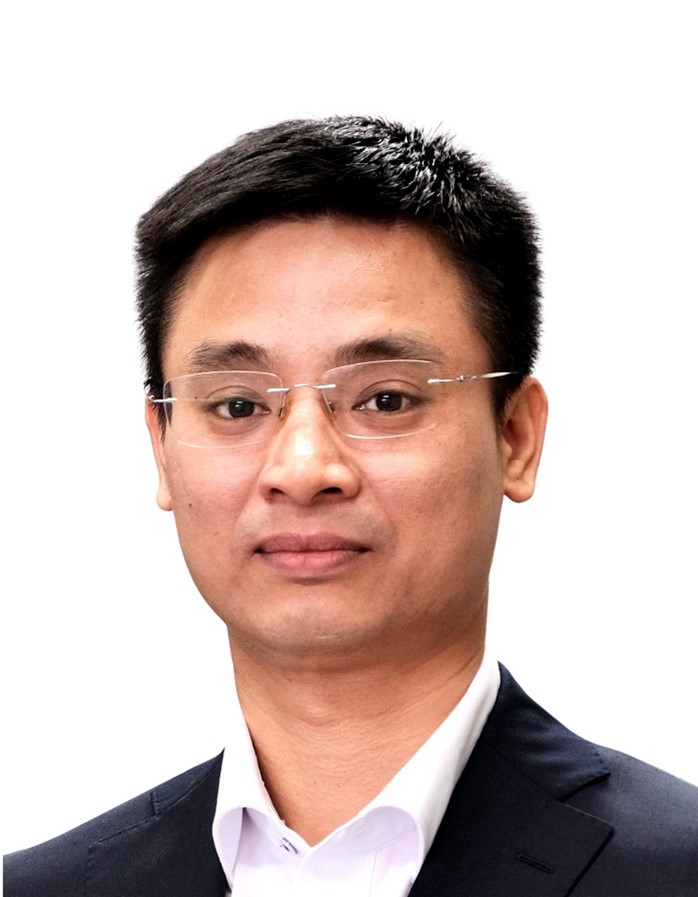
Chair: Asst. Prof. Nguyen Huu May
✧ Affiliation: Hiroshima University
✧ Email: nguyenhuumay[at]hiroshima-u.ac.jp
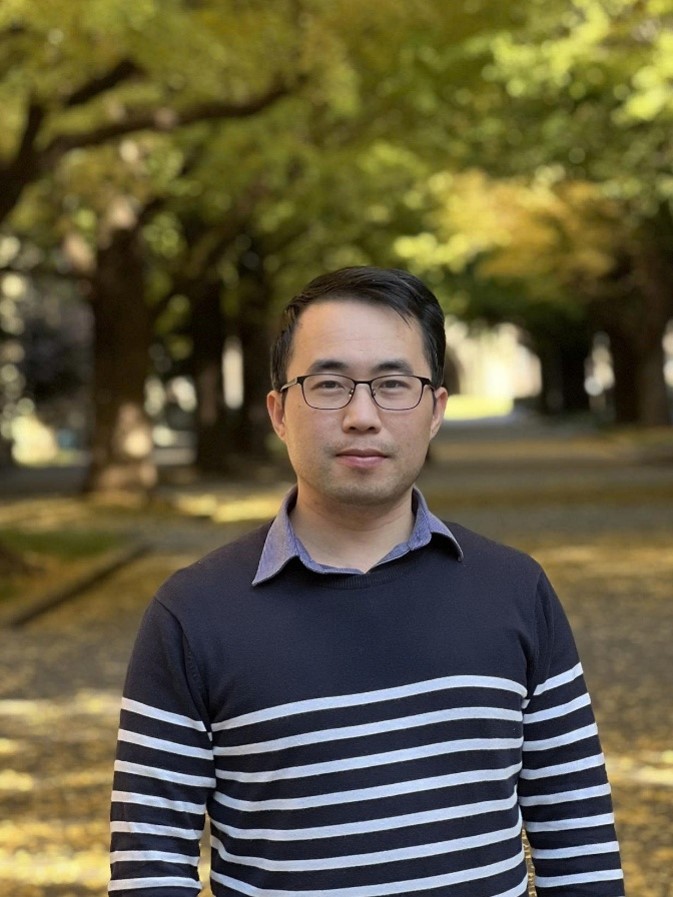
Chair: Dr. Bui Ngoc Kien
✧ Affiliation: Tokyo University
✧ Email: kienbui[at]g.ecc.u-tokyo.ac.jp
The session focuses on emerging approaches for developing and managing smart, resilient, and sustainable infrastructure, urban systems, and transportation networks in response to growing societal and environmental issues. Presentations will cover advances in digital technologies, data-driven monitoring and asset management, predictive and computational modeling, innovative and sustainable materials, and integrated urban-transport planning. This session aims to bridge the interdisciplinary perspectives across infrastructure, materials, urban systems, and mobility to advance the understanding of system performance and resilience, enhance research translation to practice, and identify strategic pathways toward next-generation infrastructure, cities, and transportation systems.
Special Session 2 – Advances in Semiconductor Materials, Devices and Applications
Chair: Dr. Phan Trong Tue
✧ Affiliation: Micron Memory Japan
✧ Email: ptuephys[at]gmail.com
This session will highlight recent advances and emerging trends in semiconductor materials, devices, and their applications, bringing together perspectives across materials science, device engineering, and applied technologies. The session will explore the development of novel semiconductor materials and material systems, including wide-bandgap, ultra wide-bandgap, two-dimensional, and emerging functional materials, as well as advances in material synthesis, processing, characterization, and integration. Particular attention will be given to the translation of material innovations into next-generation semiconductor devices, including transists, power devices, optoelectronic devices, sensors, and other emerging device architectures. Topics may include device design and fabrication, interface and contact engineering, reliability, performance enhancement, and integration with advanced semiconductor platforms.
Special Session 3 – Policy, Economy, Education, and Innovation for Sustainable Development: Interdisciplinary Perspectives in a Globalized World

Chair: Dr. Phuong Tran
✧ Affiliation: Center for Foreign Language Education and Research (FLER), Rikkyo University
✧ Email: phuongtran[at]rikkyo.ac.jp

Co-Chair: Asst. Prof. Nguyen Anh Hao
✧ Affiliation: Waseda University
✧ Email: nguyenanhhao040294[at]gmail.com
Sustainable development is no longer the responsibility of any single discipline or sector. In an increasingly globalized and technology-driven world, achieving the Sustainable Development Goals requires coordinated efforts across policy, economy, education, technology, and society. This session brings together interdisciplinary perspectives to explore how these dimensions interact in shaping more equitable, inclusive, and sustainable development.
The session examines sustainability through three interconnected perspectives. The first focuses on equity, policy, and educational structures, exploring how context-responsive educational policies and curricula can address—or unintentionally reproduce—structural inequalities, particularly in marginalized and rural communities.
The second perspective addresses internationalization, partnerships, and the social role of universities. Presentations examine Japan–Vietnam student mobility, reciprocal international exchange, and university–community engagement across Asia-Pacific contexts. These studies highlight the importance of developing partnerships that are mutually beneficial, locally responsive, and sustainable over the long term.
The third perspective focuses on innovation, artificial intelligence, and entrepreneurship. Presentations explore AI competency, digital and virtual exchange, and the growing role of AI in education and entrepreneurial development. Particular attention is given to how educational innovation can support sustainable development while addressing emerging challenges such as inequality, digital dependency, and AI-related anxiety.
Through these diverse perspectives, the session invites researchers and practitioners to reflect on how policy, economy, education, and innovation can work together to advance sustainable development in a globalized world. The session concludes with an interactive discussion on building more inclusive educational systems, reciprocal partnerships, and responsible innovation that contributes meaningfully to sustainable development.
Special Session 4 – Semiconductors for a Sustainable Society: From Materials and Devices to Education
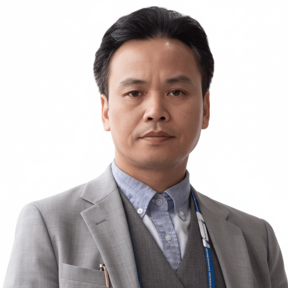
Chair: Prof. Ngo Van Nong
✧ Affiliation: Center for Low-temperature Plasma Science, Nagoya University
✧ Email: ngo.van.nong.d2[at]f.mail.nagoya-u.ac.jp
Semiconductors underpin the technologies that a sustainable society depends on, from clean energy and electric mobility to medical diagnostics and next-generation wireless networks. This session brings together talks that show how wide that reach has become, spanning materials, devices, systems and education. The keynote talks open with thermoelectric semiconductors, which convert waste heat directly into electricity. They cover strategies for decoupling electronic and thermal transport to raise the figure of merit zT, the contact and module engineering needed to turn material gains into efficient, durable generators, and new applications in wearable power, off-grid desalination and self-powered IoT sensors. A second keynote shows how microfabrication techniques from semiconductor manufacturing can build microfluidic lab-on-a-chip devices, including autonomous systems for immunoassays and blood diagnostics.
The invited talks then turn to three other fronts. Wide-bandgap SiC and GaN power devices are changing motor drives and converters in electric vehicles, offering higher efficiency, faster switching and better thermal tolerance than silicon, while still facing hurdles in cost, reliability and packaging. Silicon waveguides are opening the terahertz band for high-capacity wireless links and sensing, built on mature silicon fabrication processes. Finally, a talk on semiconductor educational materials addresses a growing bottleneck for the industry worldwide: training enough engineers with the right skills.
By placing materials science, device engineering, biomedical applications and education side by side, the session aims to spark discussion across disciplines and open new directions for collaboration in a field that touches almost every part of modern life.
Special Session 5 – AI, Data Science, and Digital Transformation

Chair: Asst. Prof. Pham Quang Trung
✧ Affiliation: Hiroshima University
✧ Email: trungpq[at]hiroshima-u.ac.jp
Artificial Intelligence (AI) and data are driving profound technological transformations across healthcare, work, and everyday life. With the rapid growth of data and advances in intelligent and embodied systems, AI applications are expanding beyond traditional chatbot-based applications toward more adaptive and interactive forms of intelligence. However, the underlying mechanisms of many AI systems remain largely a black box, making it important to understand their foundations, capabilities, and limitations from multiple perspectives. Interdisciplinary collaboration is increasingly important for understanding these developments and exploring their potential across different domains.
This session brings together interdisciplinary perspectives on the foundations and diverse applications of AI and data science. Topics range from mathematical and data-driven approaches to neuroscience and bio-inspired AI, AI safety and vision systems, embodied AI, soft robotics, and human behavior. By connecting perspectives from different fields, this session explores how insights across disciplines can contribute to the development and understanding of intelligent systems. It also highlights how fundamental insights connect to practical applications in real-world settings. Through this session, we aim to foster discussion on emerging directions in AI, data science, and digital transformation and their impact on society.
Special Session 6 – Next-Generation Functional Materials for Future Technologies
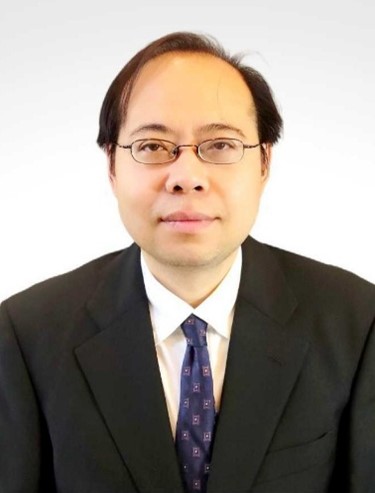
Chair: Prof. Pham Nam Hai
✧ Affiliation: Department of Electrical and Electronic Engineering, Institute of Science Tokyo
✧ Email: pham.n.ab[at]m.titech.ac.jp

Chair: Dr. DOAN Thi Kim Dung
✧ Affiliation: Innovation center of NanoMedicine
✧ Email: doan-d[at]kawasaki-net.ne.jp
Next-generation functional materials are essential for advancing future technologies and addressing global challenges in energy, environment, electronics, healthcare, and sustainable society. This session highlights recent progress in the design, synthesis, characterization, and application of functional materials across diverse research fields. The topics cover a wide range of materials and technologies, including electronic and spintronic materials, nanostructured materials for energy conversion and catalysis, materials for plasma and fusion-related systems, adsorbents and biodegradable polymers for environmental applications, and nanomaterials for biomedical imaging and nanomedicine.
Through the participation of researchers from materials science, chemical engineering, electronics, environmental science, biomedical engineering, plasma science, and energy technology, this session aims to promote interdisciplinary discussion on how material structure, functionality, durability, and processing can be tailored for emerging applications. From these diverse perspectives, the session will explore how functional materials can contribute to sustainable development, healthcare innovation, intelligent technologies, and next-generation energy systems for future society.
Special Session 7 – Innovations for Sustainable Environment, Agriculture, and Bio-Resource Utilization

Chair: Asst. Prof. Tran Duc Viet
✧ Affiliation: Hiroshima University
✧ Email: tranducviet[at]hiroshima-u.ac.jp

Co-chair: Dr. Pham Toan Thuc
✧ Affiliation: Jichi Medical University
✧ Email: phamtoan.thuc[at]jichi.ac.jp
This session explores innovative research and practical approaches that advance environmental sustainability, resilient agriculture, and the efficient utilization of biological and renewable resources. It provides an interdisciplinary platform for researchers, academics, and practitioners to exchange recent advances in technologies, methodologies, and applications addressing emerging environmental and resource-related challenges.
The session welcomes studies on sustainable environmental management, pollution prevention and remediation, wastewater and solid waste treatment, circular economy, resource recovery, and nature-based solutions. Particular attention is given to innovative approaches that transform agricultural residues, biomass, and other underutilized resources into valuable materials, products, or energy, thereby reducing waste and promoting resource efficiency.
Research related to sustainable agriculture is also encouraged, including soil and water management, biofertilizers, agricultural biotechnology, climate-resilient practices, and technologies that enhance agricultural productivity while minimizing environmental impacts. Studies on bio-resource utilization may cover biomass conversion, bio-based materials, biochar, microbial technologies, bioprocessing, and other strategies for converting renewable resources into value-added products.
By bringing together perspectives from environmental science, agriculture, biotechnology, engineering, and related disciplines, this session aims to highlight innovative solutions that bridge scientific research and real-world applications. We particularly encourage contributions that demonstrate practical applicability, interdisciplinary collaboration, circular resource use, and potential contributions to the Sustainable Development Goals.
General Sessions
General Session 1

Chair: Dr. Hoang Kim Oanh
✧ Affiliation: Gaia Vision Inc.
✧ Email: oanh.hoang[at]gaia-vision.co.jp

Co-Chair: Asst. Prof. Nguyen Thi Thuong
✧ Affiliation: Ritsumeikan University
✧ Email: thuong[at]fc.ritsumei.ac.jp
General Session 2

Chair: Asst. Prof. Pham Tam Long
✧ Affiliation: College of International Management, Ritsumeikan Asia Pacific University
✧ Email: longpt[at]apu.ac.jp

Co-Chair: Asst. Prof. Nguyen Anh Hao
✧ Affiliation: Institute of Asia-Pacific Studies, Waseda University
✧ Email: anhhaonguyen[at]aoni.waseda.jp
General Session 3

Chair: Asst. Prof. Trinh Xuan Thi Nguyen
✧ Affiliation: School of Economics, Hiroshima University
✧ Email: nguyen93[at]hiroshima-u.ac.jp